
Why Fentanyl Contamination Cleanup Requires a Different Level of Expertise Than Most People Realize
People hear “fentanyl cleanup” and picture a glorified housekeeping job: gloves on, wipe it down, toss the trash. That mindset is how responders get exposed, how buildings get cross-contaminated, and how “cleaned” spaces quietly stay dangerous.
Here’s the thing: fentanyl scenes force you to manage inhalation risk, dermal transfer, and secondary spread at the same time, often with incomplete information and high pressure. You’re not just cleaning. You’re running a controlled operation, engineering controls, validated sampling, defensible documentation, and surface-specific decon that doesn’t create new hazards (like aerosolizing residue).
One bad doffing sequence can undo two hours of careful work.
Hot take: PPE is the least interesting part of fentanyl cleanup
Yes, PPE matters. No, it won’t save a sloppy operation.
In my experience, the biggest failures come from systems problems: no airflow plan, weak containment boundaries, unclear zone control, and “good enough” wipe-down methods applied to the wrong materials. That’s especially true in fentanyl residue cleanup for homes and properties, where a respirator doesn’t fix poor scene design. It just makes people feel braver.
Site risk assessment (where professionals separate from amateurs)
Risk classification isn’t paperwork theater. It decides everything downstream: PPE level, containment design, sampling density, waste handling, and whether the space can even stay operational during remediation.
A real assessment looks at:
– Contamination patterns: where powders settle, what gets touched, what gets tracked
– Exposure pathways: dermal transfer from fomites, inhalation from disturbed particulates, incidental ingestion
– Occupancy profile: who’s around, when, and how vulnerable they are (kids, medically fragile people, staff with repeated exposure)
– Environmental variables: ventilation behavior, pressure relationships, humidity, surface types, cleaning history
– Cross-contamination likelihood: foot traffic, shared HVAC, shared tools, shared laundry routes
Now, this won’t apply to everyone, but… if your risk tiering is basically “looks clean / looks dirty,” you’re not doing risk assessment. You’re guessing.
And guessing creates liability.
Containment & engineering controls: the real backbone
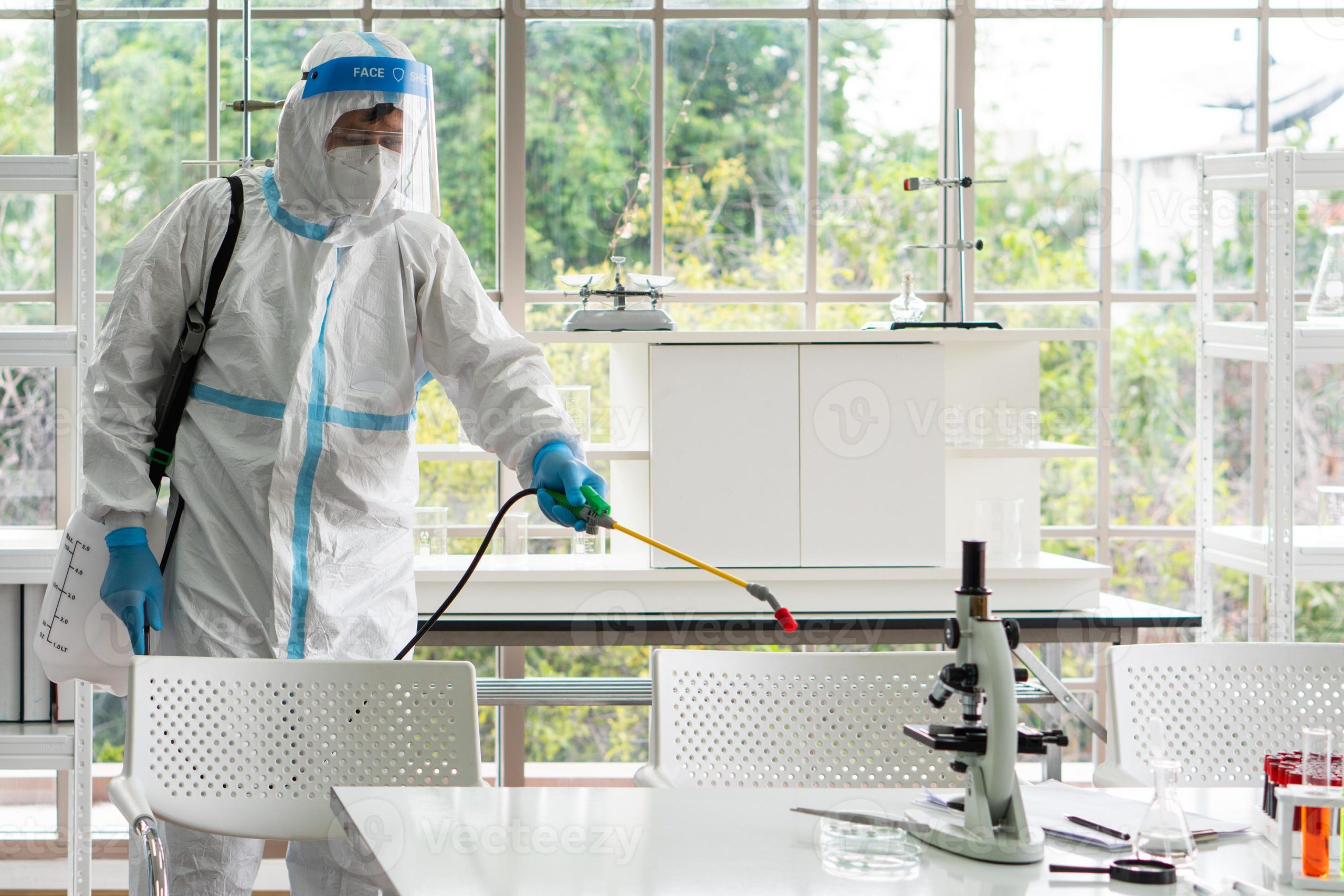
A fentanyl cleanup that isn’t built around containment discipline is just contamination redistribution with nicer wording.
Containment room essentials (practical, not theoretical)
You’re trying to control movement, of air, of people, of tools, of waste. That means hard boundaries and predictable workflow. In properly run containment, you’ll typically see:
– Airtight barriers with sealed seams (not “mostly sealed”)
– An anteroom for staged entry/exit and doffing control
– Restricted access + logging (who entered, when, why, and what they carried)
– Dedicated waste staging with clear labeling and secondary containment
– A buddy system because self-checking PPE under stress is a joke
Psychologically, this matters too. Clear steps reduce freelancing. Freelancing is where exposures happen.
Ventilation and airflow control (the part people underbuild)
Negative pressure isn’t a vibe. It’s a measurable condition.
You want directional airflow from clean to dirty, then through appropriately rated filtration (usually HEPA for particulates, sometimes combined strategies depending on the contamination profile and other scene chemicals). You also need to right-size airflow, over-ventilating can disturb settled particulates; under-ventilating lets them drift.
A good operation verifies performance, not just setup:
– pressure differential checks
– airflow confirmation
– filter integrity and change-out protocols
– alarms or at least routine monitoring for drift
Look, if you can’t explain where the air is going, you don’t control the scene.
PPE & worker safety (yes, we’re doing it, but correctly)
PPE selection should come after the risk assessment and engineering plan, not before. Otherwise you’re dressing people for uncertainty and calling it a strategy.
Typical layered protection in fentanyl remediation includes double gloves, disposable protective suits, boot covers, eye/face protection, and respirators selected for particulate hazards with fit testing and seal checks. The key isn’t the shopping list. It’s process integrity:
– buddy-checked donning and doffing
– no “one more minute” shortcuts inside contaminated zones
– immediate response to tears, seal failures, or glove compromise
– tool decon and hand hygiene as a workflow, not an afterthought
One contaminated glove touching a clean zipper pull is how clean zones become fictional.
Air management isn’t optional just because the powder looks “settled”
People love to say, “It’s on surfaces, not in the air.” Until someone bumps a chair. Or pulls carpet. Or runs a fan. Or vacuums (please don’t).
Air management is about preventing transient spikes and migration. The strategy usually combines localized capture, negative pressure in work zones, sealed penetrations, and continuous filtration with documented performance targets. Real-time monitoring helps you catch changes during active work, not hours later when someone’s already walked through the wrong corridor.
One line that should be on every work plan: What happens if containment fails mid-shift?
If the answer is “we’ll figure it out,” that’s not a plan.
Surface decontamination: same contaminant, totally different playbooks
Fentanyl residue doesn’t behave the same way across materials. And surfaces don’t tolerate the same chemistry, heat, or mechanical action. If you treat everything like painted drywall, you’ll either damage property, fail clearance, or both.
Porous vs. nonporous is the first fork in the road
Nonporous materials (some metals, many plastics, sealed finishes) often allow surface-focused removal with compatible agents and controlled wipe techniques. Porous materials are another beast. They can trap residue, smear it deeper when scrubbed aggressively, or release particles when dried and disturbed.
In the field, that means decon decisions have to be material-aware:
– Is this surface likely to absorb and retain?
– Will agitation create aerosol?
– Can the chosen agent degrade the substrate (etching, discoloration, corrosion)?
– What’s the endpoint, visual clean, or verified residue reduction?
If you don’t define an endpoint, you’ll argue with yourself forever.
Matching method to material (where “validated” actually matters)
The method has to be compatible with the surface and effective on the residue, those are separate questions. A product can “work” chemically and still be a disaster operationally if it requires aggressive agitation, long dwell times in public areas, or produces runoff you can’t control.
Verification is what keeps this honest: surface swabs, defined sampling locations, and clear acceptance thresholds tied to the site’s risk tier.
Debris, residues, and waste: where cross-contamination loves to hide
Waste handling is one of the sneakiest exposure pathways because it feels routine. Bag it, tag it, move on. Except the bag exterior becomes a fomite if you don’t treat packaging as part of containment.
Good practice tends to include double-bagging in nonporous labeled bags, segregation of sharps/powders/porous debris, controlled transport routes, and documentation of disposal chain. Air monitoring and wipe verification shouldn’t stop just because “the dirty stuff is gone.” Disturbance during removal is a common time for spikes.
Also, downtime reduction matters, but it can’t be the boss.
Rushing waste movement is how clean hallways become suspect hallways.
Documentation (the thing everyone hates until they’re sued)
Cleanup without records is just a story you tell yourself.
A defensible fentanyl remediation file usually tracks:
– risk assessment rationale and site classification
– containment layout, airflow strategy, and performance checks
– PPE program details (fit testing, training, deviations)
– sampling plan, chain-of-custody, lab methods, detection limits
– acceptance criteria and what happened when results failed
– waste handling timeline and disposal destinations
– version-controlled decision logs and incident reports
I’ve seen technically good work get questioned because the documentation looked like it was written from memory two weeks later. That’s avoidable.
Training and drills: you can’t “common sense” this
Training isn’t a slide deck. It’s demonstrated competence under realistic constraints.
Core modules should cover PPE selection, decon chemistry, air monitoring, containment discipline, and documentation workflows. Drills should be ugly on purpose: time pressure, equipment hiccups, shifting conditions, role handoffs. That’s where you find the real gaps.
And yes, communication gets trained too, incident command interfaces, escalation triggers, and who talks to the public when rumors start flying.
Because they will.
Verification, validation, and keeping it clean after you leave
Verification answers: Did we remove contamination to our defined criteria?
Validation answers: Is the space actually safe to use the way it will be used?
That means quantitative surface sampling with a defensible plan, clear reoccupancy criteria, and documentation tight enough to survive scrutiny. Post-cleanup prevention matters more than people think: access control, ongoing monitoring where appropriate, and maintenance protocols that don’t reintroduce risk (like untrained custodial staff using the wrong cleaning method and re-suspending residue).
If you don’t plan for rebound and recontamination, you’re just scheduling your next callout.
Regulatory and reporting realities (messy, but non-negotiable)
Rules vary by jurisdiction, and the enforcement landscape can be uneven. Still, a serious program behaves as if every decision could be reviewed later, by regulators, insurers, lawyers, or a property owner with a grievance.
Reports should standardize format, retention, and access controls; clearly state sampling methods and analytical limits; define trigger events for mandatory notifications; and include audit trails that show what changed, when, and why.
One concrete data point, because this topic invites misinformation: according to the U.S. CDC, illicitly manufactured fentanyl is driving sharp increases in overdose deaths in the United States, and synthetic opioids (primarily fentanyl) are a leading category in overdose mortality trends. Source: CDC overdose surveillance and provisional drug overdose death data (CDC/NCHS).
That public health reality is why these scenes are showing up in more places, and why cleanup competency has to be real, not performative.
Fentanyl contamination cleanup is a discipline. It blends industrial hygiene, hazardous materials practice, ventilation control, analytical verification, and human-factors training. People assume it’s just careful cleaning because they want it to be.
It isn’t.