
Mapping Impurity Segregation at Grain Boundaries in High-Purity Polycrystalline Graphite
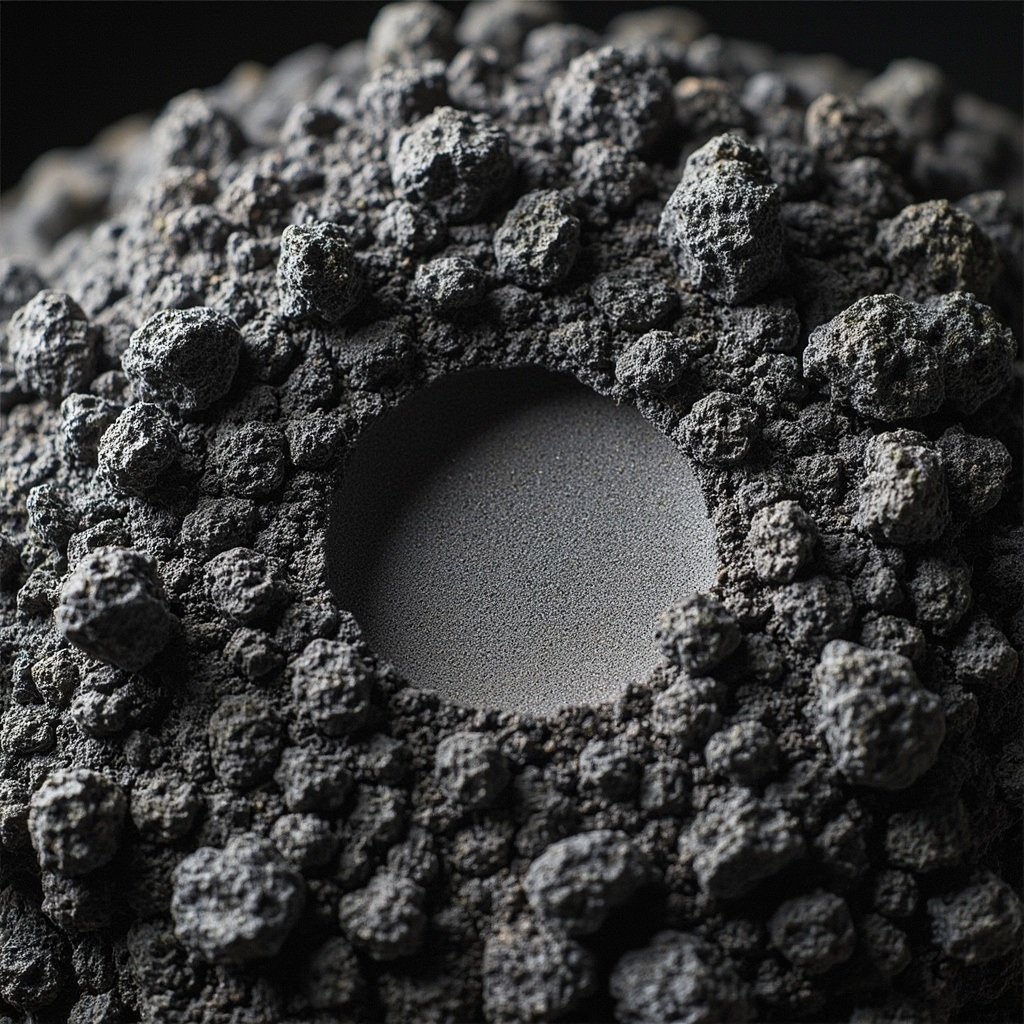 There is a dirty little secret hiding inside the cleanest graphite on the planet. You can buy the highest-purity polycrystalline graphite money can buy, certify it with the most stringent specs, and still find a microscopic ambush waiting at the grain boundaries. That ambush is impurity segregation, and it has been quietly sabotaging performance in nuclear reactors, semiconductor furnaces, and aerospace components for decades. Most engineers treat graphite as a monolithic black block. They assume that if the bulk purity is 99.9995%, the whole material behaves that way. That assumption is expensive. The grain boundaries are where the trouble lives. Impurities like boron, sulfur, and vanadium don’t spread evenly. They migrate, they cluster, and they concentrate at the interfaces between crystallites. A material that looks pristine on paper can harbor local impurity concentrations a thousand times higher than the bulk average, right at the very places where mechanical failure and chemical attack begin.
The real question is not whether segregation happens. It does. The real question is whether you can see it, measure it, and control it. Until recently, the answer was a frustrating maybe. Traditional bulk analysis methods like inductively coupled plasma mass spectrometry give you an average. They tell you the forest has a certain number of trees, but they miss the one tree that is rotting from the inside. Atom probe tomography changed the game. This technique lets you map individual atoms in three dimensions, right across a grain boundary. You can literally see where the impurities pile up. You can count them. You can watch them form clusters that act as crack initiation sites or catalytic hot spots for oxidation. For High-Purity Graphite, this is not an academic exercise. It is a quality control revolution.
The advantage for manufacturers is brutal and direct. If you know exactly where the impurities sit, you can design a purification process that targets those specific locations. Standard high-temperature treatments might push bulk purity from 99% to 99.99%, but they often leave the grain boundaries untouched. The impurities are trapped. They need a different kind of thermal cycle, a different atmosphere, sometimes a chemical getter that specifically binds to the segregating species. Without the mapping data, you are flying blind. With it, you can engineer a graphite that stays clean where it matters most. That means longer service life in nuclear moderators, fewer particles in semiconductor processing, and higher thermal shock resistance in rocket nozzles.
The industry has been chasing bulk numbers for too long. A certificate of analysis that shows parts per million of total ash is a comfort blanket, not a guarantee. The real performance killer is local concentration, and that is a grain boundary problem. Companies that invest in segregation mapping are not just buying a better material. They are buying predictability. They are buying the ability to say, with confidence, that their graphite will not fail at the interface when the temperature spikes or the neutron flux increases. That is a competitive edge that bulk purity alone cannot deliver.
So the next time someone hands you a piece of high-purity polycrystalline graphite and tells you it is clean, ask them where the clean is. Is it in the bulk, or is it at the boundary? The answer will tell you everything about whether the material is ready for the real world or just ready for a spec sheet.